
Is Your Screen Time Sabotaging Your Physical and Mental Health?
In our digital-first world, most of us are tethered to our devices. From the moment we wake up until we hit the pillow, we are often glued to our screens and doomscrolling. While the convenience of instant information is undeniable, the physical and mental health cost is mounting. Research indicates that excessive screen time is directly linked to sedentary behavior, which contributes to neck pain, shoulder tension, and poor posture - often referred to as "tech neck". When we remain stationary for hours, our metabolism slows, and our muscles weaken. Integrating functional, closed-kinetic-chain exercises like pushups can help reverse this damage, as they specifically target the shoulder girdle and core stability to correct the postural imbalances caused by excessive device use.
Beyond the physical strain, the psychological toll of doomscrolling - the compulsive consumption of negative news or endless social media feeds - can keep our bodies in a heightened state of stress, increasing cortisol levels and disrupting our natural sleep cycles, potentially putting our mental health at risk.
- How Does Endless Scrolling Impact Your Physical Health?
- Can a Push Up Challenge Fix Tech Neck?
- Can Your Screen Habits Damage Your Mental Health?
- What is "Popcorn Brain" and How it is Ruining Your Ability to Focus?
- How Can You Reclaim Your Time and Build Strength?
- Why Should You Start a Pushup Challenge?
How Does Endless Scrolling Impact Your Physical Health?

Excessive screen time fundamentally alters our physical posture and overall physical health, often leading to chronic issues that undermine our functional strength. When we are locked into a sedentary position for hours while doomscrolling, we subject our bodies to "tech neck" — a condition caused by the repetitive strain of looking down at devices, which misaligns the cervical spine and causes long-term muscle tension, neck pain. Beyond skeletal issues, the lack of movement during prolonged sessions contributes to metabolic slowdowns and disrupts natural sleep-wake cycles through blue light exposure, which interferes with melatonin production. Maintaining high levels of physical vitality requires active movement, yet the habit of mindless scrolling acts as a direct antagonist to this goal. By trading active recovery or exercise for passive consumption, we inadvertently erode our strength and cardiovascular resilience. Integrating intentional movement, such as a push up challenge, provides a necessary intervention, forcing the body out of its static state and helping to mitigate the detrimental effects that modern screen habits impose on our musculoskeletal system.
Screen time effects on our health:
- Alters physical posture
- Undermines functional strength
- Causes long-term muscle tension
- Contributes to metabolic slowdowns
- Disrupts natural sleep-wake cycles
- Erodes cardiovascular resilience
- Causes neck pain
Therapeutic Interventions: Can a Push Up Challenge Fix "Tech Neck"?
'Tech neck' (or more clinically - cervical kyphosis and forward head posture (FHP)) is one of the most dangerous effects of doomscrolling on your physical health which causes neck pain and posture problems. Numerous peer-reviewed research studies show that for every inch the head tilts forward, the pressure on the cervical spine increases by approximately 10 pounds and causes neck pain. This repetitive stress leads to the elongation and weakening of the deep neck flexors and the compensatory tightening of the upper trapezius and levator scapulae muscles. When we remain stationary in this maladaptive posture, we risk permanent structural changes to the intervertebral discs and a chronic reduction in lung capacity due to compressed thoracic mechanics. While the digital world encourages a sedentary "forward-leaning" lifestyle, tech neck treatment requires a multi-faceted approach centered on proprioceptive retraining and muscular hypertrophy. The most effective way to combat the structural decline caused by screens is through consistent, high-load physical activity, such as daily Push Up Challenge. Clinical practitioners emphasize that maintaining long-term musculoskeletal health requires more than just ergonomic adjustments; it demands active myofascial release and the strengthening of the posterior chain. From a biomechanical perspective, integrating functional movements helps restore the natural cervical curve and mitigates the risk of chronic degenerative disc disease. By prioritizing progressive resistance training, individuals can effectively counteract the neural inhibition caused by prolonged screen time and reinforce spinal stability.
The Role of Push Up Challenge in Tech Neck Treatment:
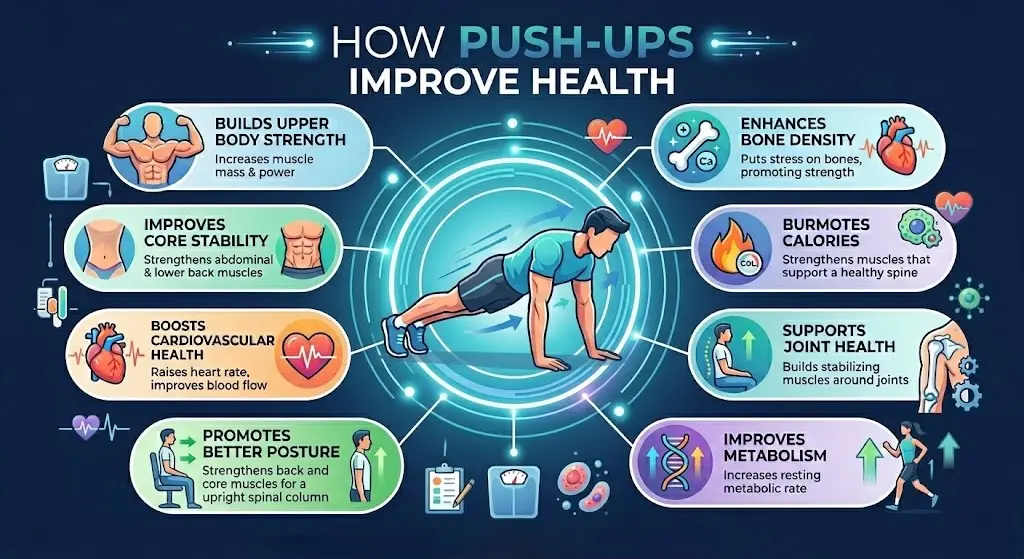
Clinical studies suggest that "passive rest" is insufficient for reversing postural imbalances. Instead, daily physical activity and active recovery through closed-kinetic-chain movements - like those found in a structured Push Up Challenge - is essential. Pushups function as a dynamic treatment for tech neck because they:
- Recruit the Serratus Anterior: Crucial for stabilizing the scapula and preventing "winging" caused by slouching.
- Reinforce Core Co-contraction: Strengthening the abdominal wall reduces the lumbar compensation often seen in individuals with poor upper-body posture.
- Promote Neural Plasticity: Breaking the "popcorn brain" cycle with physical reps forces the nervous system to shift from a high-cortisol state to a focused, dopamine-regulated state of movement.
By integrating regular intervals of daily physical activity, such as Push Up Challenge, you are not just exercising; you are performing a mechanical realignment of your skeletal system. Short, intense bursts of movement act as a "hard reset" for the motor cortex, helping to reduce chronic tension accumulated in the neck area due to technological neck condition.

Can Your Screen Habits Damage Your Mental Health?
The lack of boundaries regarding screen time has a profound, negative impact on mental health, often creating a feedback loop of stress and emotional exhaustion. Engaging in doomscrolling - the act of compulsively consuming negative news - can exacerbate feelings of hopelessness and amplify pre-existing symptoms of depression and generalized anxiety. As we saturate our minds with overwhelming amounts of external stimuli, our nervous system remains in a perpetual state of "fight or flight," which heightens cortisol levels and makes relaxation feel impossible. Prioritizing mental health awareness is essential in an era where digital saturation is the norm; without strict screen limits, the boundaries between the digital world and our internal state become blurred. For many, the constant barrage of information leads to a state where professional therapy for anxiety becomes a necessary tool to regain cognitive control and get mental health back on track. Recognizing that our digital habits are not neutral - but are actively shaping our psychological landscape - is the first step toward reclaiming our emotional equilibrium from the grip of constant connectivity. From a clinical psychology perspective, these dopamine-driven feedback loops can lead to significant cognitive fatigue and diminished executive function. Neuroplasticity research suggests that chronic exposure to fragmented digital content alters our brain's capacity for deep focus and emotional regulation. By implementing evidence-based mindfulness practices and structured digital detoxification, individuals can mitigate the risk of burnout and strengthen their psychological resilience against the compulsive nature of algorithmic social feeds. Read on to learn about a tool that helps you reduce screen time and regain mental health.

What is "Popcorn Brain" and How it is Ruining Your Mental Health?
Popcorn brain describes a state of cognitive fragmentation where our attention span becomes erratic and hyper-active, constantly "popping" from one piece of short-form content to the next. This phenomenon, fueled by the rapid-fire delivery of social media algorithms, severely compromises our ability to engage in deep, sustained focus. When the brain becomes accustomed to the high-frequency dopamine spikes provided by constant scrolling, the effort required for slower, more meaningful tasks feels increasingly taxing, often leading to increased levels of depression and irritability when offline. This fractured attention state makes it difficult to commit to tasks that require patience, such as building strength through consistent physical training, for example a Pushup Challenge. Over time, the inability to focus on singular tasks diminishes our cognitive efficiency and worsens our general mental health. By moving away from the "popcorn" style of consumption and toward mindful, controlled engagement, we can retrain our brains to find satisfaction in deeper, more intentional activities, ultimately fostering better cognitive regulation and a healthier relationship with technology.

Can You Reclaim Your Health with Push Up Challenge?
Breaking the habit of endless scrolling is notoriously difficult because social media platforms are designed to trigger dopamine loops. To regain control, you need more than just willpower - you need a system that introduces "active friction" into your digital habits. Instead of passively accepting a high screen time average, you can flip the script by turning your phone into a fitness tool. Integrating a Pushup Challenge into your day is one of the most effective ways to disrupt the cycle of inactivity. When you replace a scroll session with a set of pushups, you aren't just curbing your digital addiction - you are actively working to gain muscles, eliminate neck pain and improve your overall metabolic health.
The connection between physical activity and cognitive function is well-documented. Engaging in a Pushup Challenge increases blood flow to the brain (which can help mitigate the "popcorn brain" effect), releases endorphins (which serve as a natural antidote to the anxiety and low mood often triggered by doomscrolling).
By committing to a daily goal, you create a structure that prioritizes your well-being over digital consumption. Beyond just building muscle, the pushup is considered a "gold standard" exercise for cardiovascular health and total body integration, which helps ground your nervous system in a way that scrolling never can. As your strength grows, you will likely find that your urge to mindlessly check your phone fades, replaced by the satisfaction of physical progress.

Why Should You Start a Pushup Challenge and Use a Specialized Pushup Counter to Stop Scrolling?
Modern technology can be the problem, but it can also be the solution. Using a dedicated Pushup Challenge app that features an integrated app blocker allows you to gamify your discipline.
From the perspective of behavioral psychology, this method leverages "temptation bundling" to rewire dopamine reward systems, transforming passive screen time into a catalyst for physical exertion. Clinical observations suggest that short bursts of high-intensity activity, such as pushups, can spike the basal metabolic rate and improve cognitive clarity by increasing blood flow to the prefrontal cortex. By utilizing machine learning algorithms for real-time form correction, users can ensure injury prevention while fostering a sustainable habit of digital hygiene.
By setting a requirement - such as completing a set number of pushups to "unlock" access to distracting apps - you force your brain to pause and prioritize movement. Advanced features, like a hands-free AI pushup counter, ensure that you stay focused on your form rather than manually tracking reps. This approach doesn't just help you lose weight or gain muscles. It builds the mental discipline necessary to disconnect from the digital void and reconnect with your physical self.